Soybean Oil’s Relevance in Biodiesel Trade when Diesel and Policy are Increasingly Tight
The US allowed temporary imports of Russian diesel, named General License 135. License 135 is not a fix.

Executive Summary
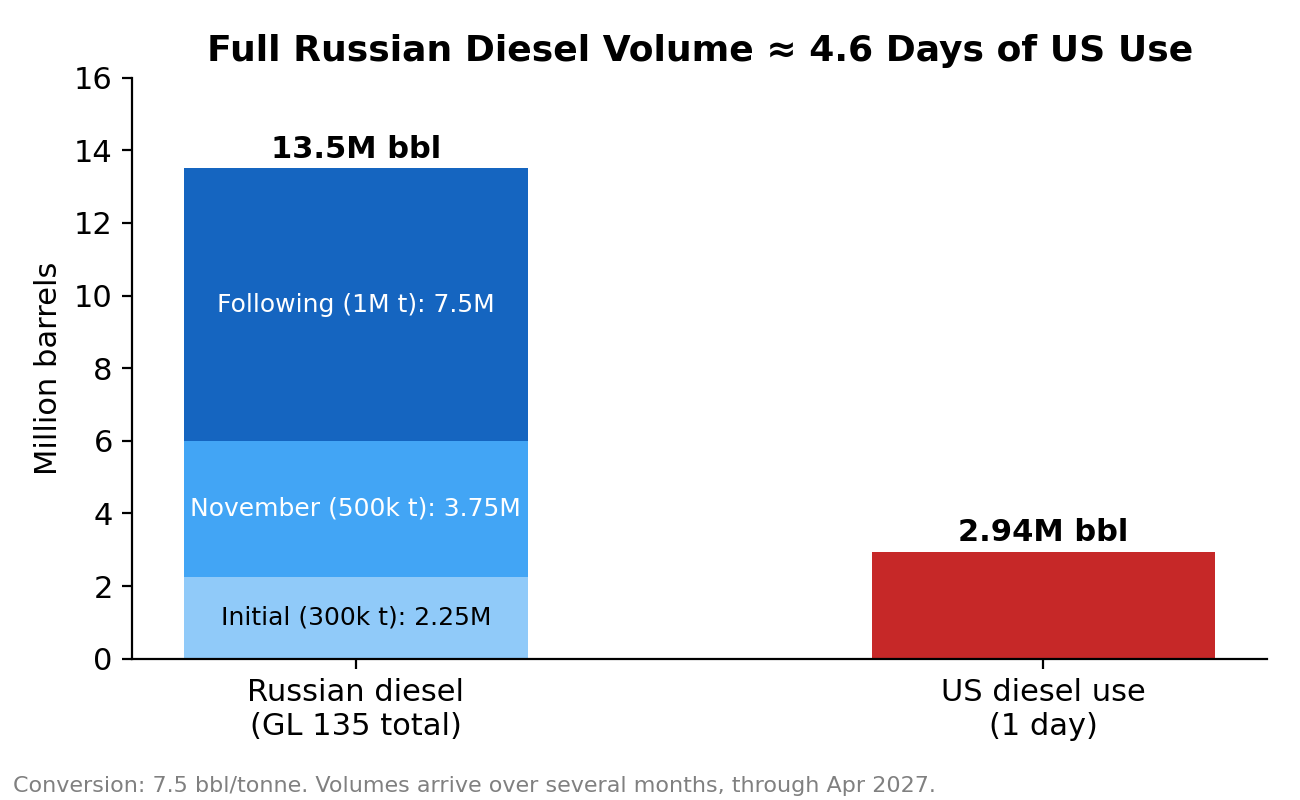
In response to the tightened diesel market with record-high prices, on October 9, 2026, the US allowed temporary imports of Russian diesel, named General License 135. License 135 is not a fix. It initially adds 2.25 million barrels of additional supply, which is less than one day of US-transport sector diesel demand. Simultaneously, biofuel mandates and tax incentives support demand for soybean oil, a major feedstock for biodiesel and renewable diesel. We believe these factors will keep soybean oil prices higher than the market currently expects throughout 2027, with prices remaining around 68-70 cents per pound in our base case.
This Is Not a Temporary Solution
The waiver accounts for a total of around 1.8 million tonnes of Russian diesel. Since the ratio is 7.5 barrels per ton, or 300 tonnes for 2.25 million barrels, we count around 13.5 million barrels. United States transport alone burns around 2.94 million barrels of diesel in a single day. This means that the full volume would cover less than 5 days of US demand. To add to this, the waiver expires in April and with it, a cease to the Russian source. Therefore, this waiver cannot reverse or fix this strain on diesel. The diesel price rise may be slowed. Alternatives need to be considered.
Supply is Adequate, so Oil Does Most of the Work
On supply alone, soybean prices should be soft. The USDA expects a harvest of 4.56 billion bushels, up 27 million bushels on better yields, and global ending stocks of 124.3 million tons. Harvest is running a bit behind, at 25% complete against a 33% average, but that delay hasn’t changed the supply picture much. Normally, a crop this large would push prices down.
Prices are holding firm instead, because strong policy-driven demand for biofuels is overriding the usual supply signal. Chicago soybean futures have risen about 8% and export prices about 7%, and China is scheduled to buy 25 million tonnes this marketing year. November soybeans trade at $12.92, about 7.7% above the USDA’s $12.00 season-average forecast.
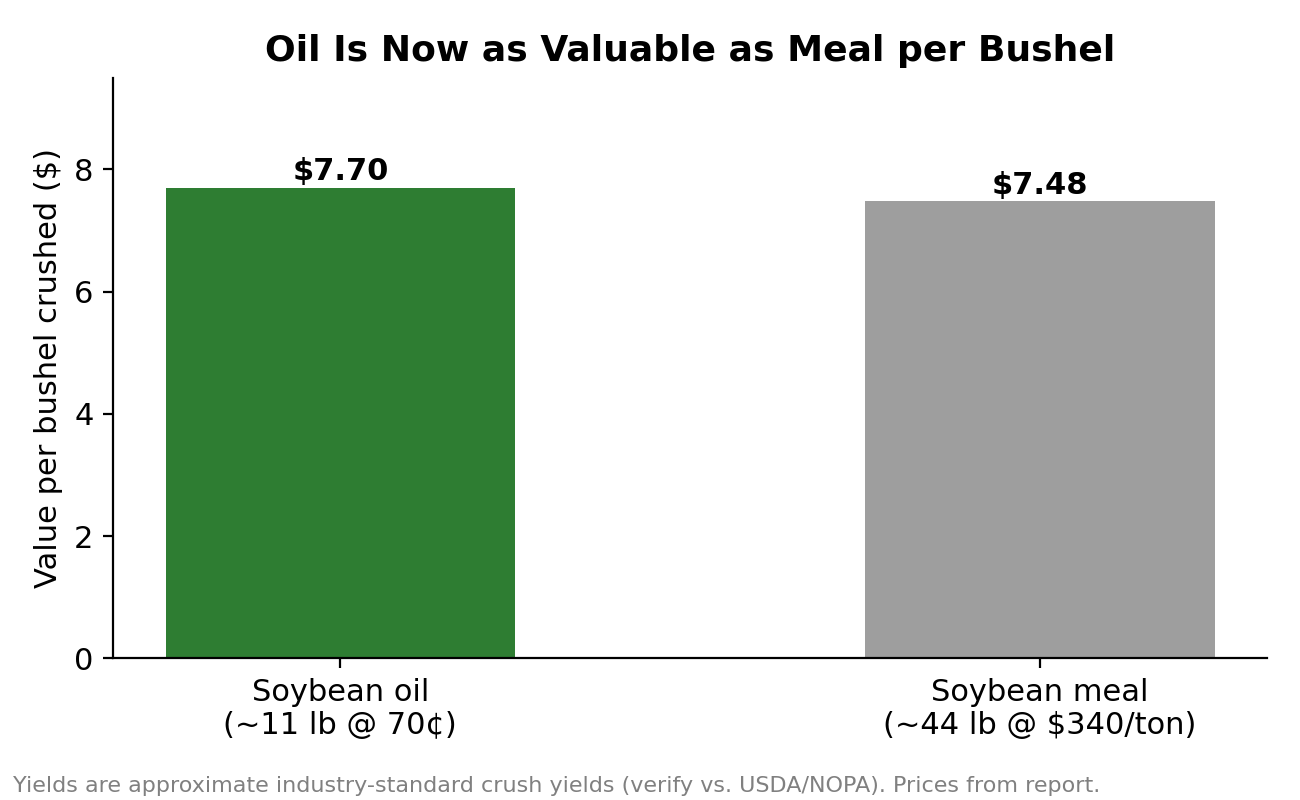
The split between the two products made from soybeans shows where that strength comes from. When crushers (processors that split beans into meal and oil) process a bushel, soybean oil sells at 70 cents per pound, or about $1,400 per short ton, while soybean meal sells at only $340 per short ton. That gap means crush margins are being driven by oil. Cheap meal is the main thing keeping bean prices from rising even faster. Soybean oil is where government policy has the most pull, and that pull comes from two places.
Setting Price Floors for Soybean Oil
The first is the EPA. It announced that it will reallocate 770 million biofuel credits (RINs) to refiner obligations for 2026 and 2027. The reallocation partly restores the roughly 1.76 billion RINs lost when 29 small refineries received 2025 exemptions (18 full and 11 partial). Because refiners now have to cover more of those obligations, they need more biofuel, which supports demand for soybean oil.
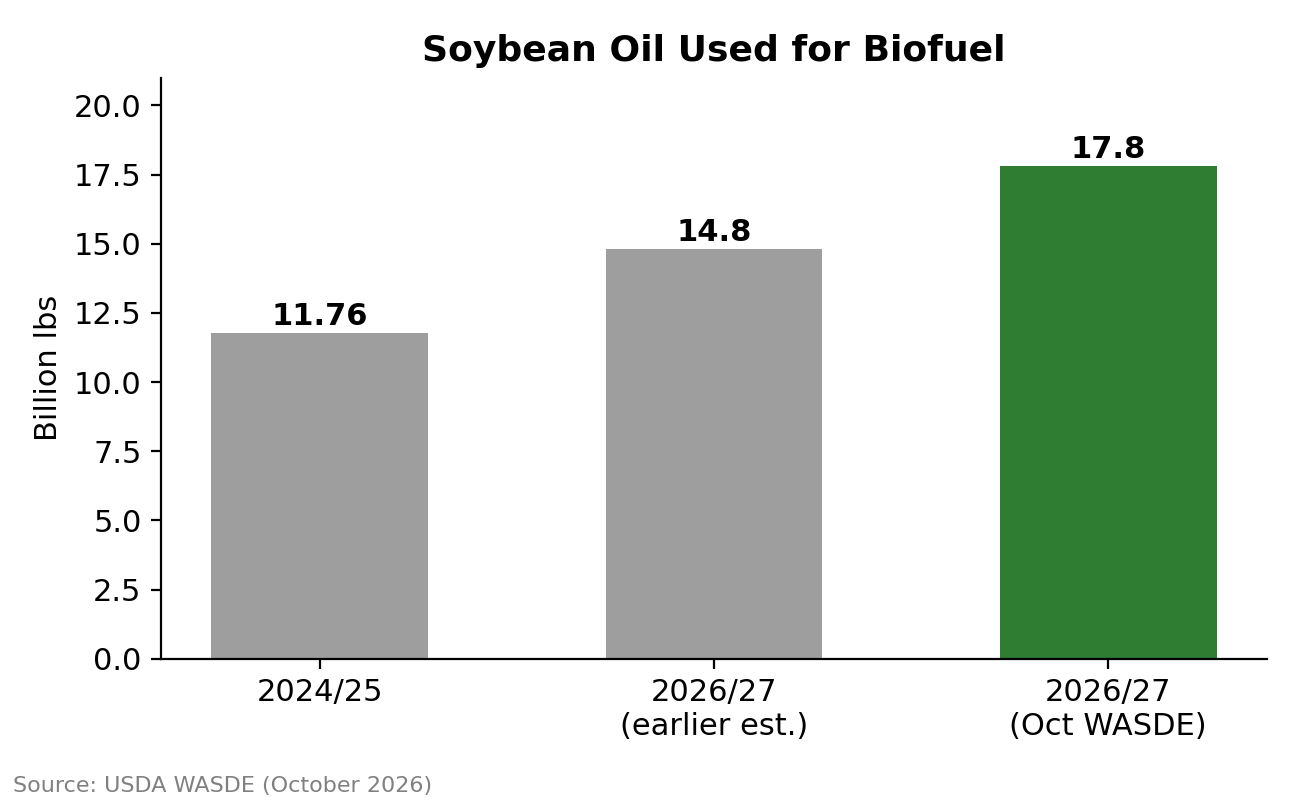
The second is the USDA’s own projections. Its October World Agricultural Supply and Demand Estimates (WASDE) put soybean oil use for biofuel at 17.8 billion lbs for 2026/27. That is up from 14.8 billion lbs in the earlier estimate and 11.76 billion lbs in 2024/25. At 70 cents per pound, it works out to about $12.5 billion of soybean oil demand. That is a large, policy-backed buyer that stays in the market even when the harvest is big.
Market Expectations
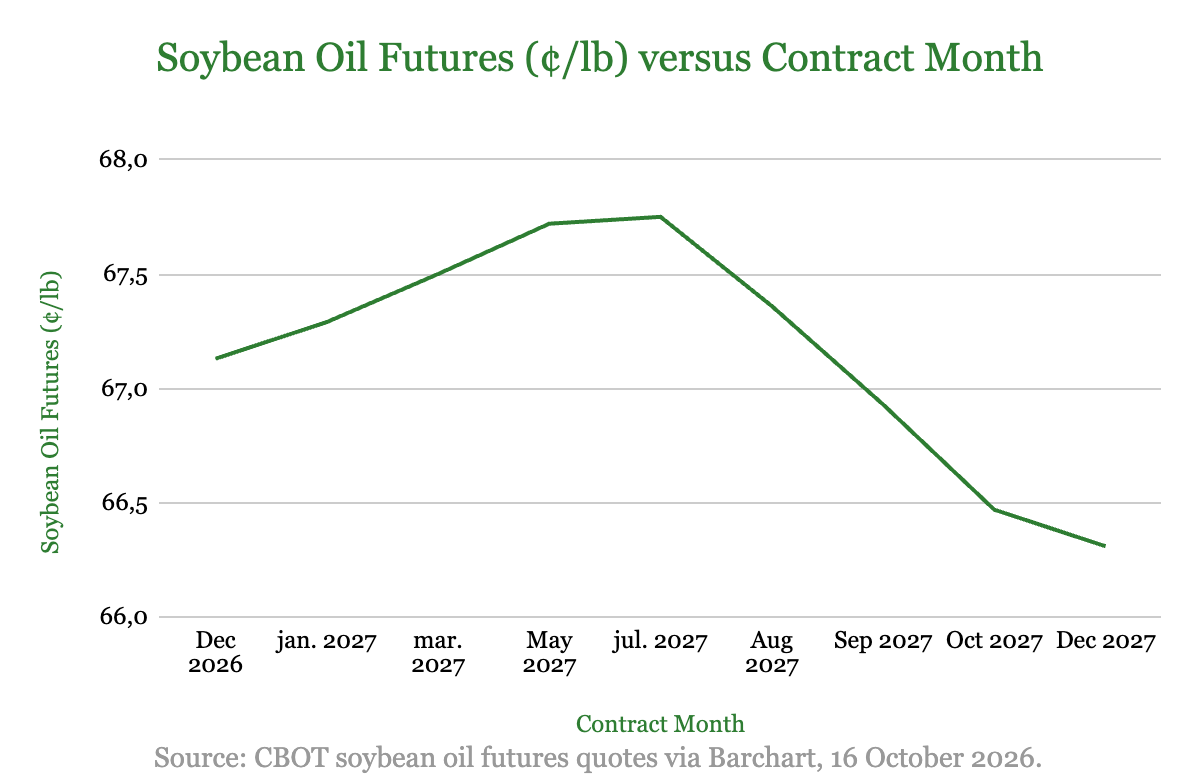
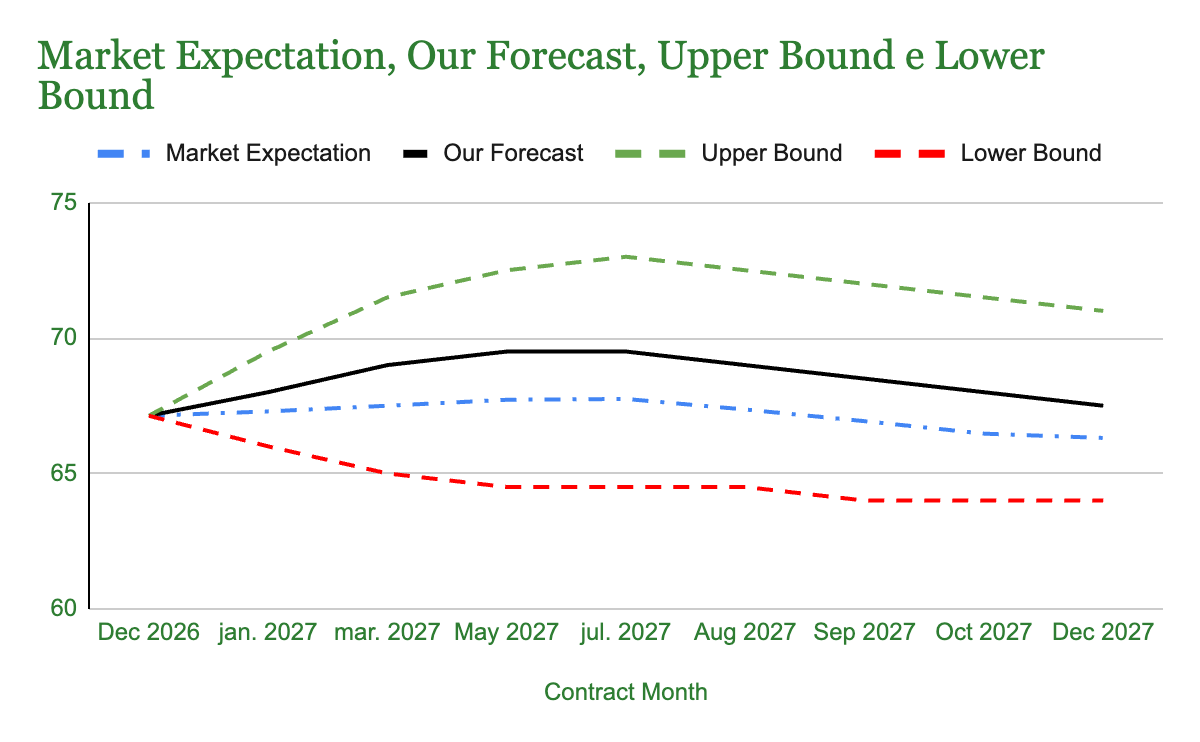
The market is already pricing a premium on US soybeans because of substantial stress from biofuel policy and energy disruptions, especially relative to international benchmarks. Still, when analyzing recent price action, we can see that the market isn’t fully buying and that the bullish policy story will translate into higher prices. So, December soybean-oil futures fell to about 67.11 cents/lb on October 14th, partly because of the uncertainty on timing and implementation of EPA RIN reallocations.
Our Forecast
We expect soybean oil prices to remain above market expectations throughout 2027, outperforming what current futures prices suggest. The market futures currently imply that the market will peak mid-2027 and decline to about 66 cents/lb by December, but we expect this normalization to be slower as biofuel demand remains strong. Russian diesel can provide only limited relief to the diesel shortage, and still has its constraints and risks. At the same time, biofuel demand should keep its growth driven by policies that support soybean oil, with USDA forecasting 17.8 billion lbs of soybean oil going toward biofuel in 2026/27. Still, the comfortable soybean supply should cap the magnitude of the price. Our base case keeps soybean oil price around 68-70 cents/lb through most of 2027, with the downside of 64-65 cents/lb if diesel conditions normalize, and upside above 72 cents if diesel shortage increases or biofuel demand exceeds current expectations.
Thesis weakens when:
- Diesel and refinery constraints ease faster than expected.
- EPA biofuel support is reduced or delayed more than expected.
- Soybean oil use for biofuels comes in below the USDA’s 17.8 billion lb forecast.
- Soybean supply rises enough to outweigh biofuel-driven demand.
Thesis strengthens when:
- Biofuel demand exceeds current USDA expectations.
- Diesel shortages, refinery disruptions, or Hormuz-related shipping pressure worsen.
- EPA policy increases renewable-fuel obligations.
Conclusion
The outlook for soybean oil largely depends on how long diesel supply pressures persist and how strongly government policy continues to support biofuel demand. Although Russian diesel imports are temporarily allowed which may provide some relief, the volumes are simply too small to significantly change the broader supply situation. Also, biofuel requirements are increasing, which creates a larger source of soybean oil demand, even though soybean production remains strong. We believe these factors will keep soybean oil prices higher than the market currently expects throughout 2027, with prices remaining around 68-70 cents per pound in our base case. On the other hand, very high soybean supply should prevent prices from rising too sharply. The main factor to look out for will be whether biofuel demand continues to grow faster than diesel supply constraints ease. If biofuel demand does continue to grow faster, then soybean oil prices will stay above current market expectations.
CBOT soybean oil futures will average between 68 and 70 cents/lb from 1 January to 31 December 2027.
Series CBOT soybean oil futures (¢/lb) Entry 67.11 Range between 68.00 and 70.00 Across 1 Jan - 31 Dec 2027 Written 14 Oct 2026
Resolves against Yahoo Finance ticker ZL=F on the average of its readings from 1 Jan - 31 Dec 2027. Not investment advice.