Iran’s Shadow Fleet
The Iran war is not over. The US blockade remains in full effect and prevents the exodus of any vessel that dares to leave Iranian shores.
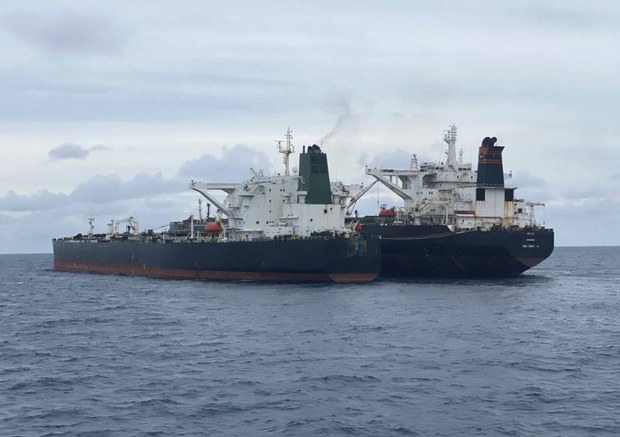
The Iran war is not over. The US blockade remains in full effect and prevents the exodus of any vessel that dares to leave Iranian shores. The consequences have been noticeable: since the beginning of the Iranian war, crude oil prices have skyrocketed past $100 per barrel, and the IMF estimates that global GDP growth will dip to around 2% as global inflation may rise up to 6%, as opposed to an estimate of 3.3% growth in January. Under this scenario, this would imply a loss of $1.53 trillion USD in potential year-to-year growth. Many avenues have been explored to end the global energy crisis. In June, talk of a ceasefire spread and the world rejoiced in a potential oil glut, but ultimately the deal fell through. Now, an interesting opportunity has arisen, and it comes in the form of the dormant Iranian shadow fleet.
For context, this armada was constructed over the course of decades by Iran and friends, primarily to evade historical US sanctions and funnel crude to independent teapot refineries at a heavily discounted rate, most notably in China. Most ships in the fleet are sanctioned and blacklisted by the US as a result of being linked to Iran. Unable to be used traditionally, they fly false flags and operate in the titular “shadows”, avoiding detection. The fleet has 162 VLCCs, and each VLCC carries up to 2 million barrels per load; with a median baseline barrel price of $50 historically, each VLCC totals around $100M per trip. As a result of the blockade, however, the decentralized collection of ships remains stranded across the globe. Iran’s revenue generated from the exportation of crude has dropped to zero, and so too has that of each shadow VLCC.
Now, the independent owners of each VLCC face a dilemma. Their prized possessions don’t generate any income in their current business and, having been blacklisted by the US, are not logistically able to generate revenue carrying other cargo. If given a legal route towards a sale, shadow vessel owners may agree to sell. Meanwhile, the US believes that the shadow fleet could remain a lifeline for the Iranian government. They’re pushing for a dismantling of the fleet and, in the meantime, have continued enforcing the blockade on the Strait of Hormuz, denying the movement of crude from other states in the Middle East and consequently keeping oil prices high.
Herein lies an interesting proposition that could work towards solving the crisis in the Middle East. If the US and its allies were to gain control of the aforementioned sanctioned members of the fleet and release them to a friendly buyer who redeploys the ships into allied transport through the Strait, they could in all probability kill two birds with one remarkably imperial stone; it would both deal a major blow to the ability and breadth that the fleet could have, and generate a burst of crude flow into the supply chain.
Moreover, the danger that deters the majority of current carriers from doing jobs in the Strait would have a far more muted effect on the repurposed vessels. Non-sanctioned ship owners are only willing to ship oil loads through the Strait if their revenue outpaces their insurance premiums (which have skyrocketed) and general costs. While non-sanctioned tankers average 11.4 years of age, shadow vessels average 21.7. In the same vein, while a newer VLCC would fetch $120M, the older shadow vessels, which are inspected four times less often, would only go for $35M. Since the ship is worth less, the insurance premiums would be far cheaper, and ship owners would be more willing to ship oil through the Strait.
Though this proposal may seem very attractive and would drastically reduce the crude bottleneck in the Middle East, it is not without reasonable suspicion. Diplomatically, since US-Iranian relations are already at a breaking point, Iran may see the repurposing and use of vessels formerly a part of the Iranian shadow fleet as hostile. In the interest of preserving their own leverage on the Strait, they would likely purposefully target these tankers to render them useless, making the risk even greater for owners. Additionally, ship owners may be coerced by the Iranian regime not to sell.
Although the plan has merit, its success depends on more than the economics of idle ships and discounted sales. The Iranian regime’s ability to pressure owners and threaten repurposed vessels could outweigh even a generous financial incentive. A legal route to selling a tanker offers little reassurance if the sale endangers its owner or crew. For the proposal to work, the US and its allies would need to offer credible protection alongside sanctions relief and a willing buyer. Without those assurances, the same fleet that once carried Iranian crude may remain idle, demonstrating that an economic opportunity alone cannot resolve a crisis sustained by coercion and conflict.