Excess Wheat and Black Sea Conflict
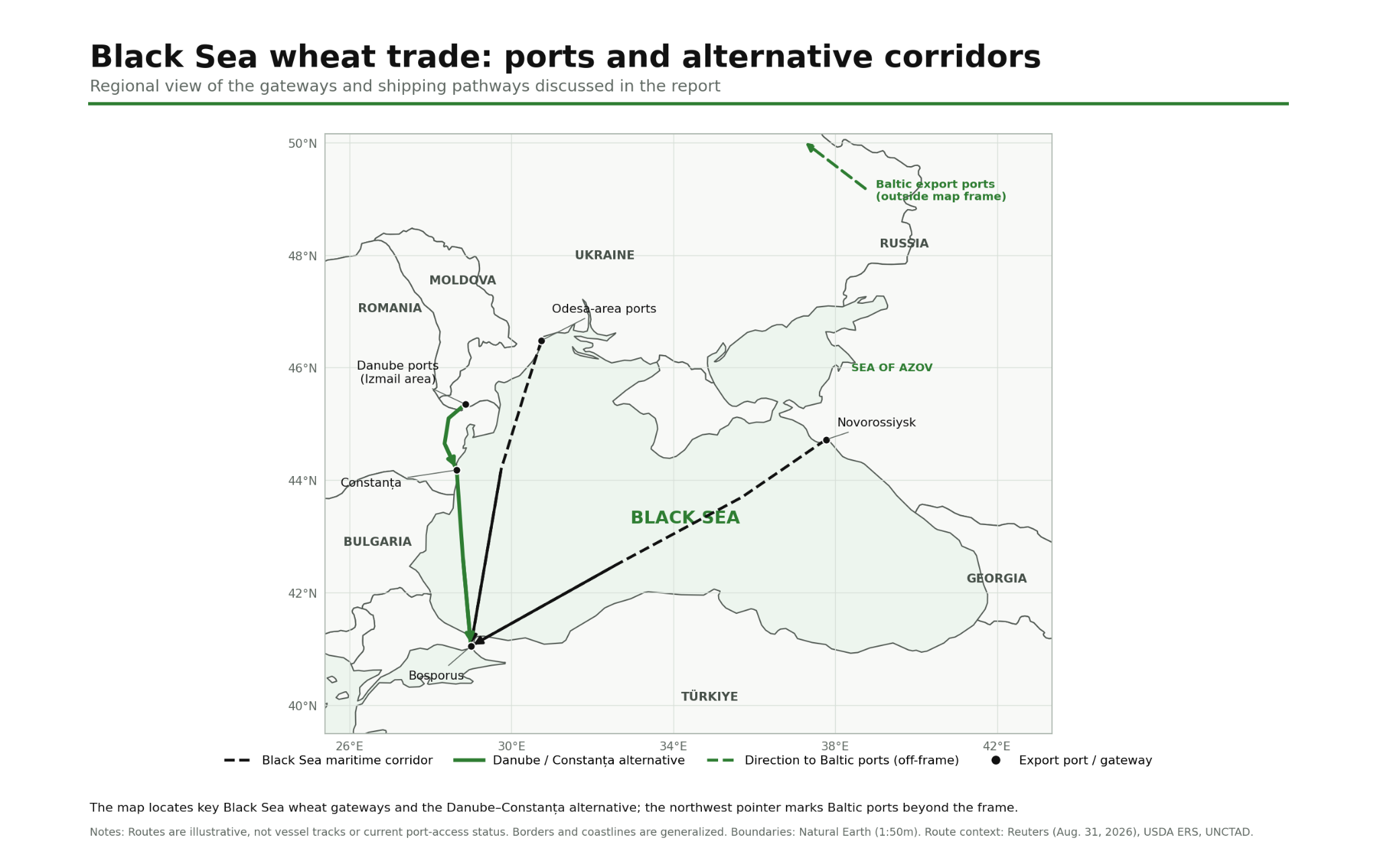
Attacks on vessels, ports, and export infrastructure have made Black Sea wheat shipments increasingly unreliable.

Executive Summary
Attacks on vessels, ports, and export infrastructure have made Black Sea wheat shipments increasingly unreliable. Around 90% of Russian seaborne grain exports move through the Azov and Black Sea ports, leaving limited scope to replace disrupted shipments through Baltic routes. Large global stocks may therefore coexist with tight supplies available to international buyers. We expect wheat prices to remain elevated at about $5.75 to $6.50 per bushel through early 2027.
Can Other Exporters Fill the Gap
For 2026/27, the USDA’s November WASDE projects wheat exports of 39 million metric tons from Russia, 30.5 million from Canada, and 16.5 million from Argentina. Canada and Argentina could partly offset a decline in Russian shipments, but their ability to do so will depend on grain availability, shipment timing, destination, and quality. These volumes are already included in the USDA’s forecasts, so they should not be counted as additional supply.
Ukraine, the other major Black Sea exporter, could continue moving grain through alternative routes, including the Danube River and ports in Romania. How much these routes can compensate for disrupted port access will depend on the duration of the disruption, available shipping and route capacity, and transport costs per metric ton. Other exporters could help cover some shortfalls, but shipments beyond the USDA’s existing projections should not be assumed.
Figure 2 · Export revisions partly offset Black Sea cuts
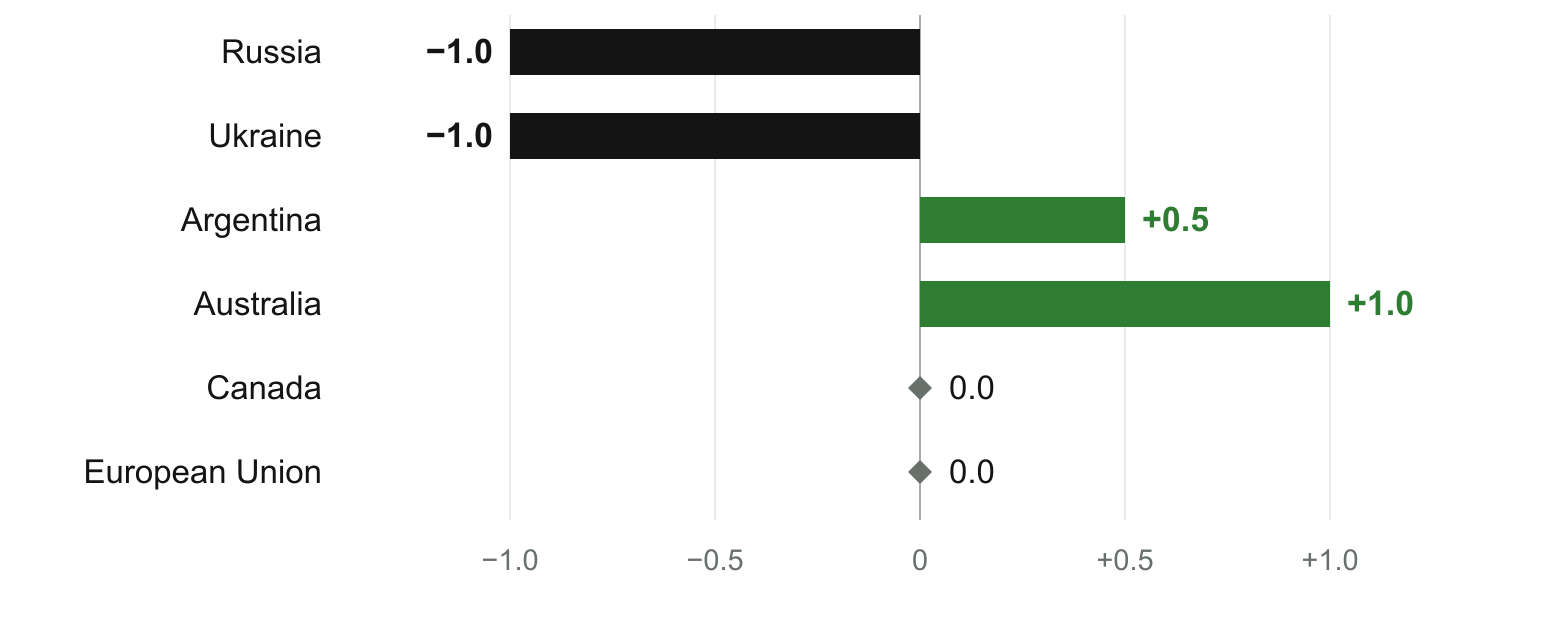
Source: USDA WASDE, November 10, 2026, p. 19. Revisions are forecasts, not realized shipments, and are not attributable to shipping alone.
Market Expectations
In its October 2026 Commodity Markets Outlook, the World Bank forecasts grain price increases of 14.1% in 2026 and 9.3% in 2027. Its U.S. hard red winter wheat benchmark is expected to rise by 28% in 2026 and 13.5% in 2027, reflecting Black Sea risks, higher farming costs, and weather pressures. Corn prices are projected to rise from $203 per metric ton in 2025 to $223 in 2026 and $235 in 2027.
Higher energy costs could add pressure on grain production and transport. The Bank forecasts Brent crude oil averaging $91 a barrel in 2026, compared with $69 in 2025. Prolonged Black Sea disruption, higher energy prices, or stronger El Niño impacts could worsen food affordability.
Figure 3 · World Bank wheat price outlook
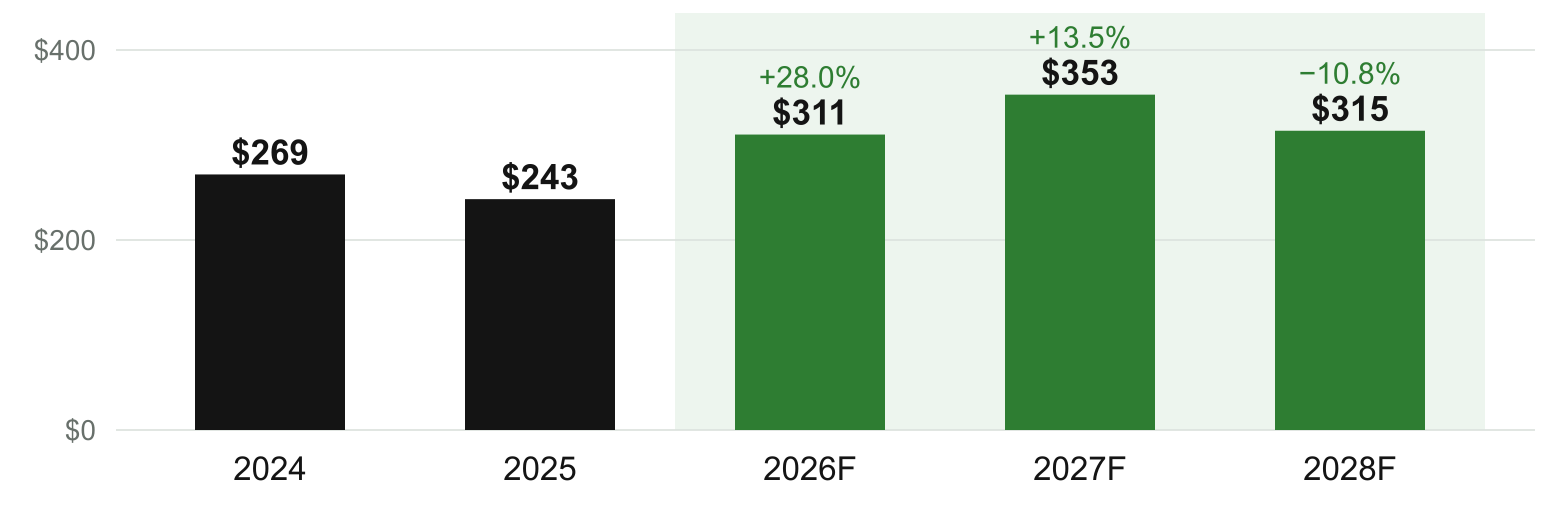
Source: World Bank, Commodity Markets Outlook, October 2026, Table 1. Black bars show historical prices; green bars and F indicate forecasts.
Our Forecast
We expect wheat prices to remain elevated through early 2027, at around $5.75 to $6.50 per bushel, even if total global supply remains largely unchanged. The pressure stems from tightening supplies of grain available for export as demand continues to grow.
The USDA’s November projections put global wheat ending stocks at 280.8 million metric tons and Russia’s stocks at 20.1 million. It lowered Russian wheat exports to 39 million metric tons, the lowest level in five years. These stocks offer limited relief while shipping disruptions prevent grain from reaching international markets.
Lower future production is a further risk. If prolonged export constraints weaken farm margins or restrict cash flow, growers could reduce planting or input use. A smaller subsequent crop could prolong price pressure after shipping improves. This remains a scenario to monitor through planting intentions, acreage, and farm-margin data.
Thesis strengthens when
- Attacks on ports and vessels intensify or persist.
- Black Sea port access remains restricted.
- Freight costs rise.
- Import prices retain a premium over pre-disruption levels.
Thesis weakens when
- A trade agreement restores reliable Black Sea passage.
- Ports reopen and export shipments recover.
- Freight costs fall.
- Other exporters ship more than currently forecast.
Conclusion
The outlook depends on how quickly export access improves and whether alternative suppliers can cover the shortfall. Sustained shipment recovery and lower freight costs would ease pressure, while prolonged disruption would constrain wheat available to international buyers. Planting and farm-margin data will help determine whether the disruption is also affecting future production.
Chicago wheat futures will average between $5.75 and $6.50 per bushel from 13 November 2026 to 31 March 2027.
Series Chicago wheat futures (cents per bushel) Range between 575.00 and 650.00 Across 13 Nov 2026 - 31 Mar 2027
Resolves against Yahoo Finance ticker ZW=F on the average of its readings from 13 Nov 2026 - 31 Mar 2027. Not investment advice.